Destructive chewing of furniture when left alone is not an act of canine spite or a lack of house training. It is the externalization of internal distress, usually driven by physiological frustration, unmet biological needs, or clinical separation-related anxiety. Resolving this behavior requires a shift from reactive punishment to a proactive, science-based modification of the dog’s environment and emotional state.
The Ethology of Destructive Chewing: Why Furniture?
To solve the problem, we must first understand the canine drive to masticate. For a dog, the mouth is a primary sensory organ, similar to the human hand. However, beyond mere exploration, chewing serves a vital regulatory function within the canine nervous system.
The Neurological Feedback Loop
When a dog engages in repetitive chewing, the action stimulates the trigeminal nerve. This stimulation triggers the release of endorphins and dopamine in the brain, effectively lowering the dog’s cortisol levels. This is why destructive chewing often occurs when a dog is left alone; the animal is literally attempting to self-medicate their anxiety or boredom. In a state of isolation, the dog seeks out items that carry the “scent of the pack”—the sofa, the bed frame, or the wooden legs of a chair—to create a sensory anchor to their missing social group.
Boredom vs. Separation Anxiety
It is critical to distinguish between “Exploratory Chewing” (boredom) and “Anxious Destruction” (Separation Related Behavior).
- Boredom: The dog chews because they are under-stimulated. The damage is often widespread but less intense, and the dog often sleeps after the activity.
- Separation Anxiety: The damage is often focused on “exit points” (door frames, window sills) or items heavily scented by the owner. This is frequently accompanied by vocalization, hypersalivation, or elimination. Understanding [applied animal ethology](https://www.sciencedirect.com/topics/agricultural-and-biological-sciences/applied-ethology) is key to identifying which bucket your dog falls into.
At a Glance: Identifying the Root Cause
| Behavior Detail | Likely Cause: Boredom | Likely Cause: Anxiety |
|---|---|---|
| Location of Damage | Random (legs of tables, rugs, pillows) | Exit points (doors, frames) or high-scent items |
| Timing | Occurs 1-2 hours after departure | Occurs within 10-20 minutes of departure |
| Physical Signs | None; dog appears relaxed upon return | Panting, dilated pupils, damp fur from drool |
The Real Solution: A Step-by-Step Intervention Protocol
Stopping furniture destruction requires a multi-pronged approach: management (stopping the rehearsal), enrichment (providing a better outlet), and desensitization (lowering the stress of being alone).
Step 1: Immediate Environmental Management
You cannot train a dog who is currently practicing the bad behavior. Every time your dog chews the sofa, the neural pathway for “chewing sofa = feeling better” is reinforced.
1. Restrict Access: Use exercise pens, baby gates, or a specific “dog-proofed” room to prevent access to the furniture in question.
2. Visual and Olfactory Blockers: If your dog targets specific table legs, wrap them in heavy-duty PVC piping or use furniture shields.
3. Applying Aversive Tastes: Use a bitter spray (like denatonium benzoate). Crucial Tip: Do not just spray and walk away. Put the spray on a piece of tissue, let the dog taste it, and see their reaction. If they hate it, they will associate that scent on the furniture with the foul taste. This creates an [active avoidance response](https://www.psychologytoday.com/us/basics/operant-conditioning).
Step 2: The “Contrafreeloading” Strategy
Most domestic dogs are “unemployed.” They receive their calories for free in a bowl, leaving them with hours of untapped cognitive energy.
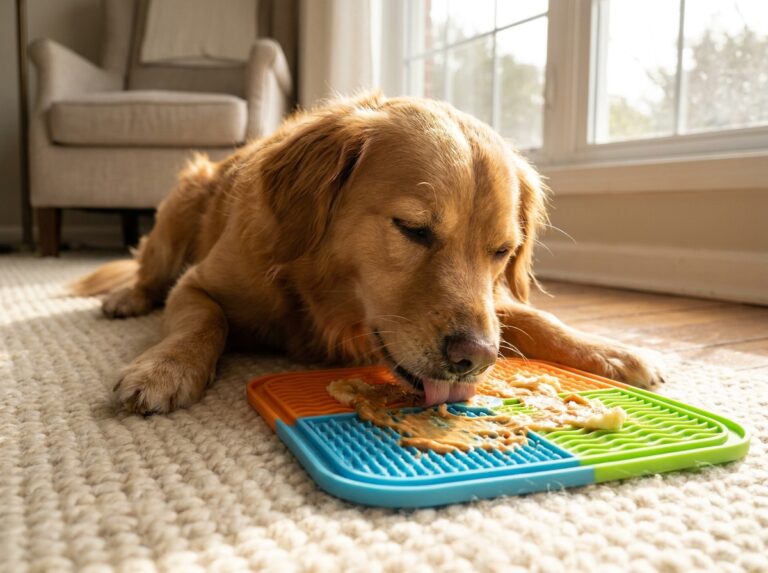
1. Ditch the Bowl: All meals should be delivered through enrichment toys (Kongs, Toppls, or snufflemats).
2. Texture Variety: Dogs have individual “mouth-feel” preferences. If your dog chews wood (table legs), provide coffee wood chews or root chews. If they chew upholstery, provide heavy-duty plush toys or braided fleece.
3. The High-Value Trade: Reserve the most enticing, longest-lasting chew (like a frozen, stuffed bone) specifically for when you leave. This builds a positive association with your departure.
Step 3: Lowering the Arousal Threshold
Destructive chewing is often the “peak” of a rising tide of stress. To stop the peak, you must lower the baseline.
1. Physical Exercise: This should happen at least 30 minutes before departure, but it must be followed by a “cool down” period. High-intensity fetch right before you leave can actually leave a dog in a state of high physiological arousal, making them more likely to chew.
2. Mental Exercise: 15 minutes of scent work or trick training is more exhausting than a hour-long walk. This utilizes the [olfactory bulb](https://www.akc.org/expert-advice/news/how-dogs-see-with-their-noses/), which consumes significant metabolic energy.
Step 4: Desensitizing Departure Cues
Many dogs begin to spiral into anxiety before the owner even leaves. They hear the keys, see the shoes, or watch the coffee maker turn off.
1. Identify Cues: Make a list of everything you do before leaving.
2. Randomize Cues: Pick up your keys, then go sit on the couch and watch TV. Put on your coat, then go wash the dishes.
3. Micro-Departures: Walk out the door, count to five, and come back in before the dog has a chance to react. Gradually increase this time from seconds to minutes, then hours.
Troubleshooting: When the Protocol Fails
If you have implemented the above steps and the furniture is still being destroyed, you are likely facing one of three common failure points.
Failure Point 1: The “Secondary Gain” Loop
Sometimes, a dog learns that destruction gets a reaction. Even if you come home and scold them, that “intensity” can be reinforcing for a dog who has been starved of social interaction all day.
- The Fix: Your return should be calm and boring. If you find damage, do not acknowledge it or the dog. Silently put the dog in another room, clean up the mess, and then re-evaluate your management strategy.
Failure Point 2: Misjudging the Aversion
Not all dogs find “Bitter Apple” sprays disgusting. Some dogs actually enjoy the taste of citrus or certain bittering agents.
- The Fix: If the dog continues to chew through the spray, you haven’t found the right deterrent. Try a different base (menthol vs. bitter) or focus entirely on physical barriers while increasing enrichment.
Failure Point 3: Threshold Miscalculation
In desensitization, if you move too fast, the dog “sensitizes” (becomes more reactive) rather than desensitizes. If you move from 5 minutes of being alone to 30 minutes and the dog fails, you have jumped too far.
- The Fix: Return to the last successful duration. If the dog was fine for 10 minutes, stay at 10 minutes for several days before trying 12 minutes. Progress in canine behavior is rarely linear.
Advanced Prevention: Building Separation Confidence
Preventing a recurrence of furniture chewing involves more than just toys; it involves teaching the dog that “aloneness” is a safe, productive state.
The “Place” Command for Independence
Teach your dog to stay on a specific mat or bed while you are in another room. This builds “distance duration.” If a dog cannot handle you being in the kitchen while they are in the living room, they certainly cannot handle you being at work. Gradually increase the distance until you can move freely through the house without the dog “velcroing” to your side.
Sensory Calming
Research into [canine auditory enrichment](https://www.ncbi.nlm.nih.gov/pmc/articles/PMC6940913/) suggests that specific frequencies can lower heart rates in shelter environments.
- Audio: Play classical music or specifically designed canine “bio-acoustic” music.
- Pheromones: Use synthetic Dog Appeasing Pheromone (DAP) diffusers near the areas the dog previously targeted. These mimic the pheromones released by a lactating mother and can have a subtle, calming effect on the limbic system.
The Role of Nutrition and Gut Health
While this is a non-medical guide, it is worth noting that chronic stress affects the microbiome. A dog with gastrointestinal discomfort due to high cortisol levels may be more prone to oral fixations. Ensure the dog is on a high-quality, stable diet to eliminate physical discomfort as a contributing factor to irritability and subsequent destruction.
When to Seek Professional Help
If your dog is injuring themselves (breaking teeth, bleeding gums) or if the destruction is so severe that it poses a structural threat to your home, you may be dealing with clinical Separation Anxiety. In these cases, behavioral modification should be done in conjunction with a Veterinary Behaviorist who can assess if pharmaceutical support is necessary to “lower the floor” of the dog’s anxiety so that learning can actually take place.
Key Takeaways
- Chewing is Regulatory: Destructive chewing is usually an attempt to lower cortisol through trigeminal nerve stimulation.
- Manage the Environment: You cannot train your way out of a behavior the dog is still practicing; use gates, pens, and taste deterrents to stop the rehearsal.
- Enrichment is Mandatory: Replace “free” meals with cognitive work (Kongs, puzzles) to meet the dog’s biological need for “seeking” behavior.
- Address the Cues: Desensitize the dog to your “leaving rituals” (keys, shoes, coats) to prevent an anxiety spike before you even exit the door.
- Consistency over Intensity: Success comes from daily, incremental increases in “alone time” and consistent management, not from one-off “fixes” or gadgets.