
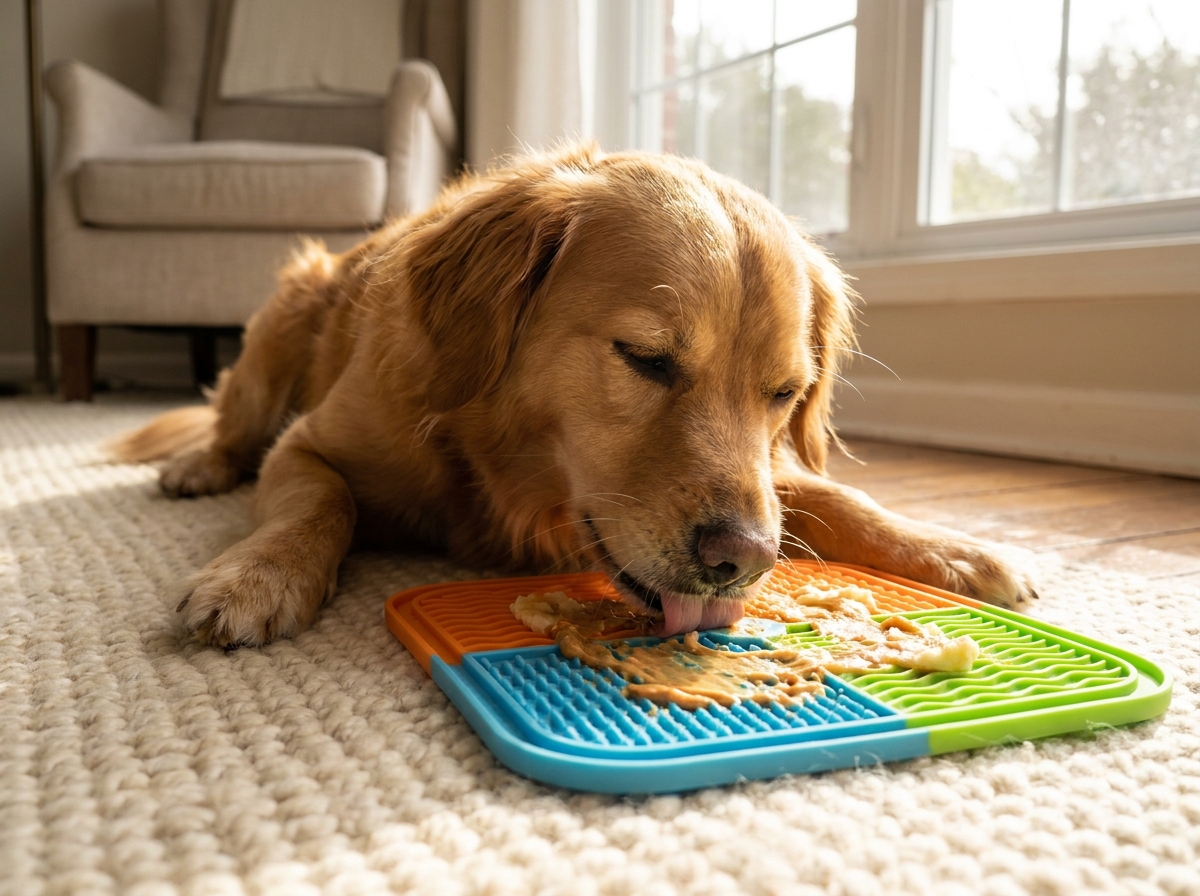
Anxious chewing is not a behavioral defect or an act of spite; it is a desperate biological attempt to self-soothe. By shifting this destructive chewing into structured, repetitive licking, you can actively lower your dog’s heart rate and cortisol levels. Here is the exact science and step-by-step methodology to transform your anxious chewer into a calm, focused licker.
The Science of Oral Soothing in Canines
To understand why a lick mat is such an effective therapeutic tool, we must look at canine ethology and physiology. When a dog experiences stress—whether from separation anxiety, noise phobias, or environmental changes—their sympathetic nervous system (SNS) enters a state of high arousal. This triggers the “fight, flight, or freeze” response, floodlighting their system with cortisol and adrenaline.
Destructive chewing is an active, high-arousal outlet. While it does discharge pent-up motor energy, it can also keep the dog in a highly agitated state. Licking, conversely, is a low-arousal, rhythmic behavior that activates the parasympathetic nervous system (PNS)—the “rest and digest” system.
The Neurological Loop of Licking
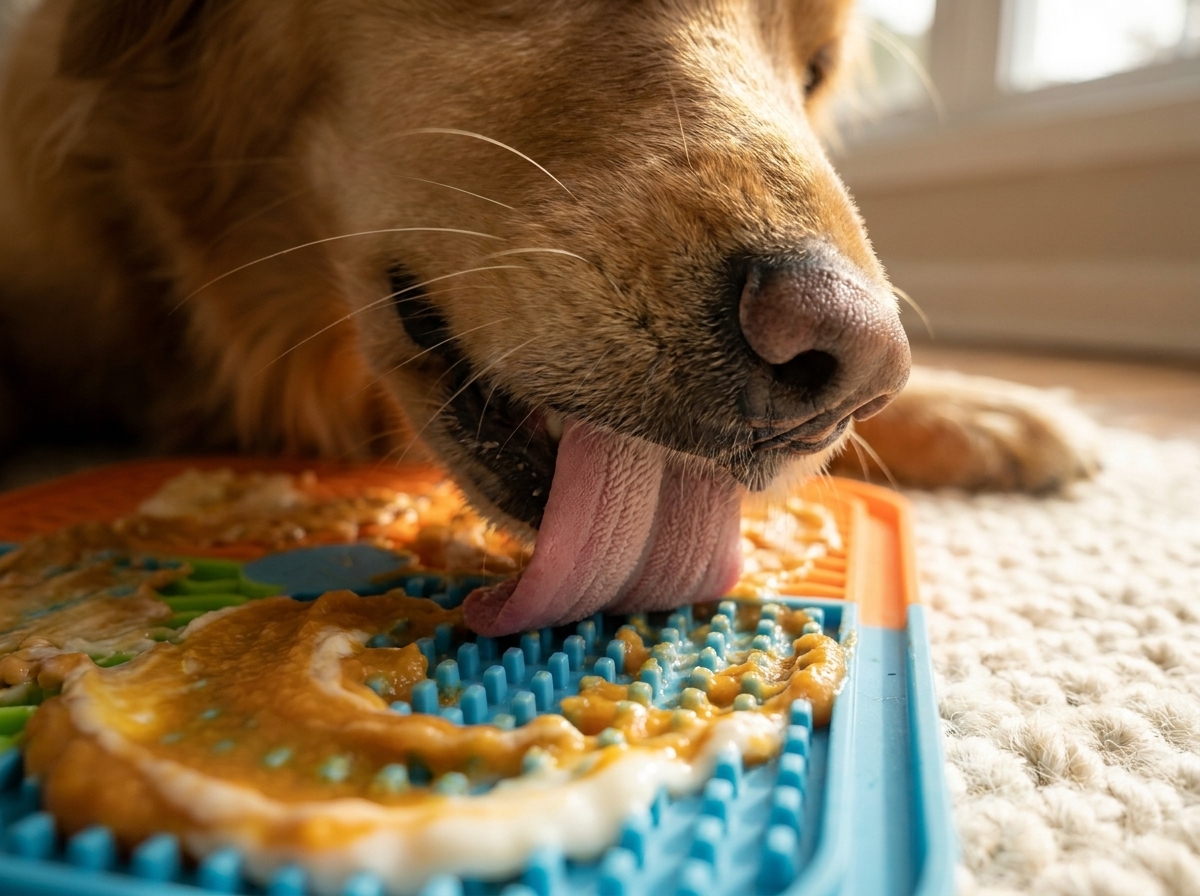
When a dog’s tongue repeatedly sweeps across a textured surface, it stimulates the sensory receptors of the glossopharyngeal and vagus nerves. This physical action triggers a cascade of neurochemical events:
- Endorphin Release: The brain releases endogenous opioids, which act as natural pain relievers and mood stabilizers.
- Dopamine Production: The repetitive nature of licking provides a predictable, self-rewarding feedback loop, releasing dopamine—the neurotransmitter associated with pleasure and motivation.
- Cortisol Reduction: Clinical studies in veterinary behavior research on stereotypic behaviors show that sustained oral behaviors significantly reduce circulating salivary cortisol levels over time.
By replacing the destructive chewing of furniture or drywall with a structured licking task, you redirect the dog’s anxious energy into a biologically soothing behavioral pattern.
The Gut-Brain Axis Connection
The nervous system and the gastrointestinal tract are in constant communication via the vagus nerve. What your dog licks does not just occupy their mind; it chemically influences their brain. Incorporating specific nutrients—such as tryptophan, L-theanine, and gut-supporting probiotics—onto a lick mat directly leverages the gut-brain axis to promote systemic relaxation.
—
Choosing the Right Gear & Mechanics
Not all lick mats are created equal, and choosing the wrong texture or material can lead to frustration, ingestion of foreign objects, or increased anxiety.
Textures and Their Purpose
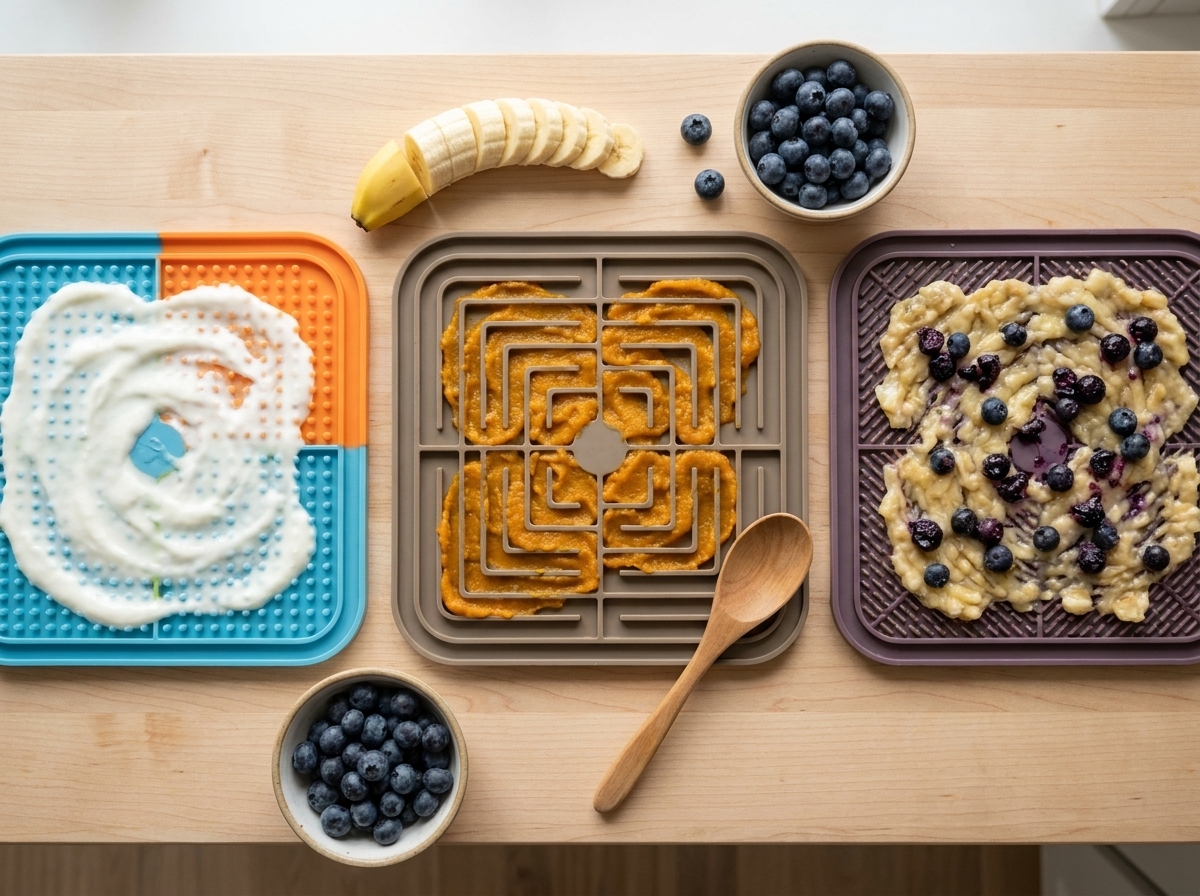
- Soothing Nubs: Small, dense dots. Ideal for highly liquid substances like bone broth, kefir, or pureed baby food. They require precise, gentle tongue movements.
- Labyrinths/Mazes: Complex, deep ridges. Best for viscous pastes like peanut butter, wet food, or pumpkin. These prolong the challenge for highly motivated dogs.
- Cross-hatches/Grids: Ideal for trapping small pieces of kibble, freeze-dried treats, or minced meat within a binding agent.
Quick Reference: Lick Mat Selection Guide
Use the following table to match your dog’s behavioral profile with the appropriate lick mat configuration and material:
| Behavioral Profile | Recommended Material | Best Texture Design | Key Safety Consideration |
|---|---|---|---|
| The Power Chewer | Natural, heavy-duty vulcanized rubber | Deep, wide channels (easy clearance) | Must be supervised; avoid thin silicone mats that can be torn and swallowed. |
| The Easily Frustrated Dog | Food-grade silicone (soft on tongue) | Shallow nubs or open grids | Start unfrozen to build confidence; keep ingredients highly palatable. |
| The Fast/Gulping Eater | Rigid, BPA-free plastic backing with silicone overlay | Tight labyrinths or complex mazes | Secure the mat to the floor using heavy-duty suction cups. |
| The Senior or Sensitive Licker | Ultra-soft, pliable silicone | Fine, low-profile nubs | Avoid freezing solid; serve chilled or room temperature to protect sensitive teeth. |
—
7 Genius Lick Mat Recipes for Anxious Chewers
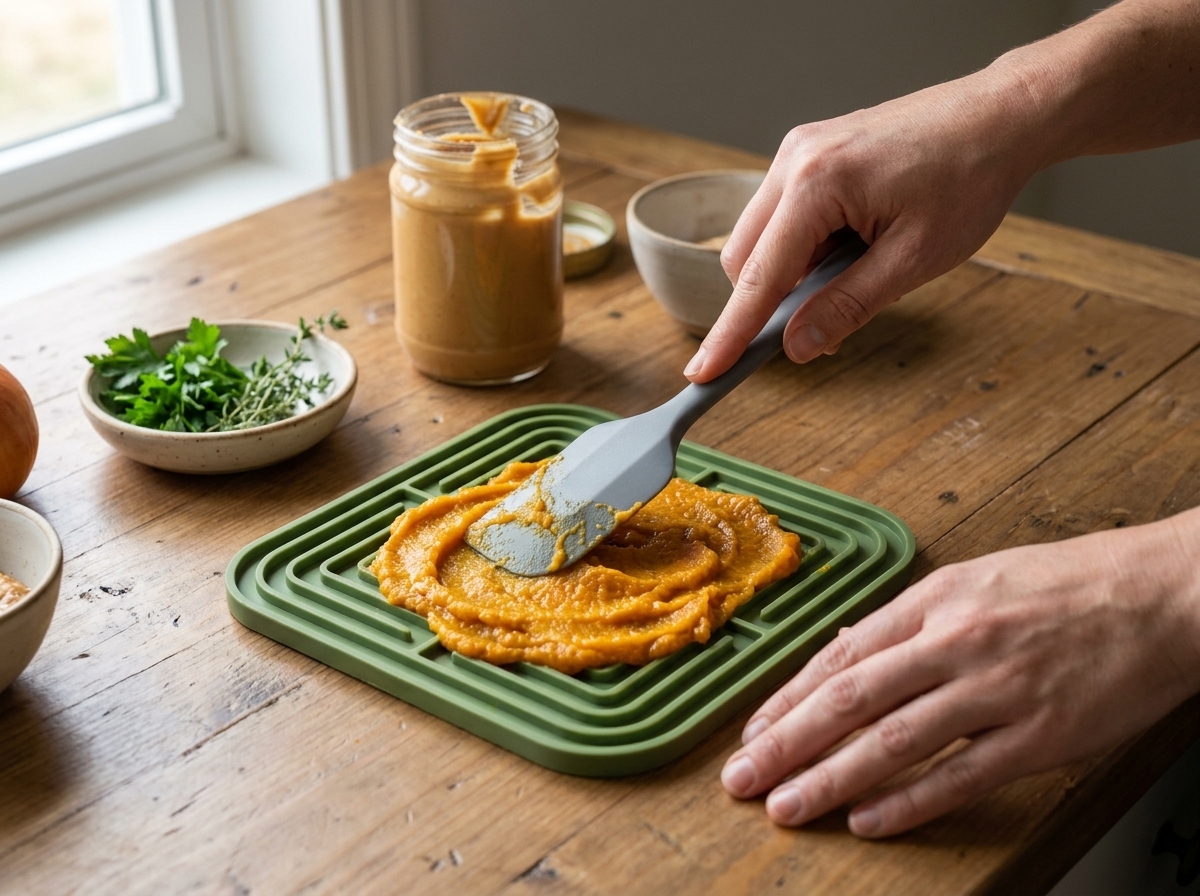
These recipes are formulated to target anxiety through both physical engagement and neurochemical support.
1. The Serotonin Booster
This recipe focuses on high levels of L-tryptophan, an essential amino acid that serves as the direct precursor to serotonin—the neurotransmitter responsible for mood stabilization and sleep regulation.
- Ingredients:
* 3 tbsp skinless, unseasoned plain turkey breast (pureed)
* 2 tbsp unsweetened canned pumpkin puree
* 1/2 ripe banana (mashed)
- Preparation:
1. In a small bowl, vigorously mix the pureed turkey, pumpkin, and mashed banana until a smooth, spreadable paste forms.
2. Using a silicone spatula, press the mixture deep into the cross-hatch sections of the lick mat.
3. Place the mat in the freezer for 1 hour to slightly firm up the fats and fibers without turning it rock-solid.
- Why It Works: Turkey is exceptionally rich in tryptophan. The carbohydrates in the pumpkin and banana trigger an insulin response that helps shuttle tryptophan past the blood-brain barrier, maximizing its uptake and conversion into calming serotonin.
2. The Deep-Freeze Chamomile & Kefir Soother
This recipe leverages the calming properties of chamomile and the gut-brain axis benefits of fermented dairy.
- Ingredients:
* 1/4 cup strong-brewed chamomile tea (cooled completely)
* 3 tbsp unsweetened plain goat kefir
* 6-8 wild blueberries (mashed)
- Preparation:
1. Brew chamomile tea using organic, caffeine-free tea bags. Let it cool to room temperature, then chill in the refrigerator.
2. Whisk the cooled tea into the goat kefir.
3. Spread the mashed blueberries across the nub sections of the lick mat first, then pour the kefir-tea mixture over the top, allowing it to pool around the nubs.
4. Freeze flat for 3 to 4 hours.
- Why It Works: Chamomile contains apigenin, an antioxidant that binds to specific receptors in the brain to decrease anxiety and promote sleep. Kefir introduces beneficial probiotics that support a healthy microbiome, which is directly linked to lower systemic stress levels.
3. The Omega-3 Neuro-Calm
Systemic inflammation is increasingly linked to behavioral reactivity and anxiety in canines. This recipe delivers a highly bioavailable dose of anti-inflammatory fatty acids.
- Ingredients:
* 1 canned sardine in water (no salt added, drained)
* 2 tbsp steamed, mashed sweet potato (no skins)
* 1/4 tsp unsalted kelp powder
- Preparation:
1. Thoroughly mash the sardine with a fork until no large chunks remain.
2. Mix the mashed sardine with the sweet potato puree and kelp powder until completely homogeneous.
3. Press the paste firmly into a labyrinth-style lick mat, ensuring it fills the bottom of every crevice.
4. Freeze for 2 hours before serving.
- Why It Works: Sardines are packed with Eicosapentaenoic Acid (EPA) and Docosahexaenoic Acid (DHA). These omega-3 fatty acids support cognitive function, preserve neural membrane fluidity, and reduce neuroinflammation, helping to blunt highly reactive stress states.
4. The Collagen & Hydration Shield
This recipe is designed for maximum duration. It creates a highly viscous, gelatinous texture that takes an extended period of time to lick clean.
- Ingredients:
* 1/4 cup low-sodium, dog-safe bone broth (warm, not hot)
* 1 tbsp chia seeds
* 2 tbsp unsweetened organic applesauce
- Preparation:
1. Stir the chia seeds into the warm bone broth. Allow the mixture to sit undisturbed for 15 to 20 minutes until it forms a thick, gel-like consistency.
2. Fold in the unsweetened applesauce.
3. Pour the gel onto a deep-grooved lick mat. Use a spoon to distribute it evenly.
4. Freeze for at least 4 hours until completely solid.
- Why It Works: The mucilage in chia seeds, combined with the gelatin in bone broth, creates a highly viscous matrix. Once frozen, this matrix requires methodical, slow licking to melt, keeping your dog in a low-arousal state for an extended duration.
5. The High-Motivation Transitional Paste
For dogs who are highly destructive and typically ignore standard food toys, this recipe offers an intensely aromatic profile designed to break through high-stress states.
- Ingredients:
* 1 tbsp freeze-dried beef liver (crushed into a fine powder)
* 2 tbsp pure, dog-safe peanut butter (ensure it is completely free of xylitol)
* 1 tbsp plain unsweetened Greek yogurt
- Preparation:
1. Thoroughly mix the crushed beef liver powder into the peanut butter and Greek yogurt.
2. Spread this rich paste across the mat in a very thin, even layer.
3. Serve at room temperature for maximum aroma, or freeze for 30 minutes to slightly stiffen the mixture.
- Why It Works: The strong, high-value scent of beef liver acts as a powerful primary reinforcer. This immediate olfactory stimulation bypasses cognitive hesitation, instantly capturing the attention of an anxious dog and redirecting their oral drive away from destructive targets.
6. The Herbal Zen Garden
This recipe combines natural calmative herbs with a highly digestible, casein-rich protein base.
- Ingredients:
* 1/4 cup organic plain cottage cheese
* 1/8 tsp valerian root powder (consult your veterinarian first for proper dosage relative to your dog’s size)
* 2 tbsp pureed butternut squash (cooked, unsalted)
- Preparation:
1. In a small bowl, blend the cottage cheese and butternut squash puree.
2. Evenly fold in the valerian root powder.
3. Spread the mixture smoothly over a nub-textured lick mat.
4. Freeze for 1.5 to 2 hours.
- Why It Works: Cottage cheese contains casein, which yields bioactive peptides that have been shown to have a calming effect on the nervous system. Valerian root acts as a mild, natural sedative, helping to reduce physical tension and environmental hyper-vigilance.
7. The Multi-Layered Endurance Challenge
For dogs with advanced stamina, this recipe provides varying textures and flavors at different depths to maintain cognitive focus and prevent boredom.
- Ingredients:
Base Layer:* 3 tbsp of your dog’s standard high-quality canned wet food
Middle Layer:* 1 tbsp of plain cream cheese or ghee (clarified butter)
Top Layer:* 2 tbsp of organic, pureed baby food (beef or chicken flavor) sprinkled with a few crushed freeze-dried minnows
- Preparation:
1. Spread the canned wet food onto the bottom of the mat. Freeze for 1 hour.
2. Retrieve the mat and apply a thin smear of cream cheese or ghee over the frozen base layer. Freeze for another 30 minutes.
3. Pour the pureed baby food on top, press the crushed minnows into the liquid, and freeze the entire assembly solid (4+ hours).
- Why It Works: The shifting textures, densities, and flavor profiles require the dog to constantly adapt their licking strategy. This intensive cognitive engagement acts as a form of passive mental exercise, effectively exhausting anxious energy.
—
The Step-by-Step Non-Medical Intervention Protocol
To successfully use a lick mat to modify anxious behavior, you cannot simply drop it on the floor during a panic episode. If introduced improperly, the lick mat can actually become a predictor of stress. Follow this systematic, five-step desensitization protocol.
“`
[Phase 1: Baseline Pairing] -> [Phase 2: Establish “Calm Zone”] -> [Phase 3: Introduce Cryo-Chilling] -> [Phase 4: Pre-Trigger Presentation] -> [Phase 5: Independence Phase]
“`
Step 1: Baseline Pairing (No Stressors Present)
Introduce the lick mat during a time of absolute peace (e.g., late evening when the household is quiet). The recipe must be warm or room temperature—unfrozen—making it incredibly easy for the dog to clean. This builds immediate positive association and confidence, ensuring the dog does not experience frustration during their first interaction with the tool.
Step 2: Establish the “Calm Zone”
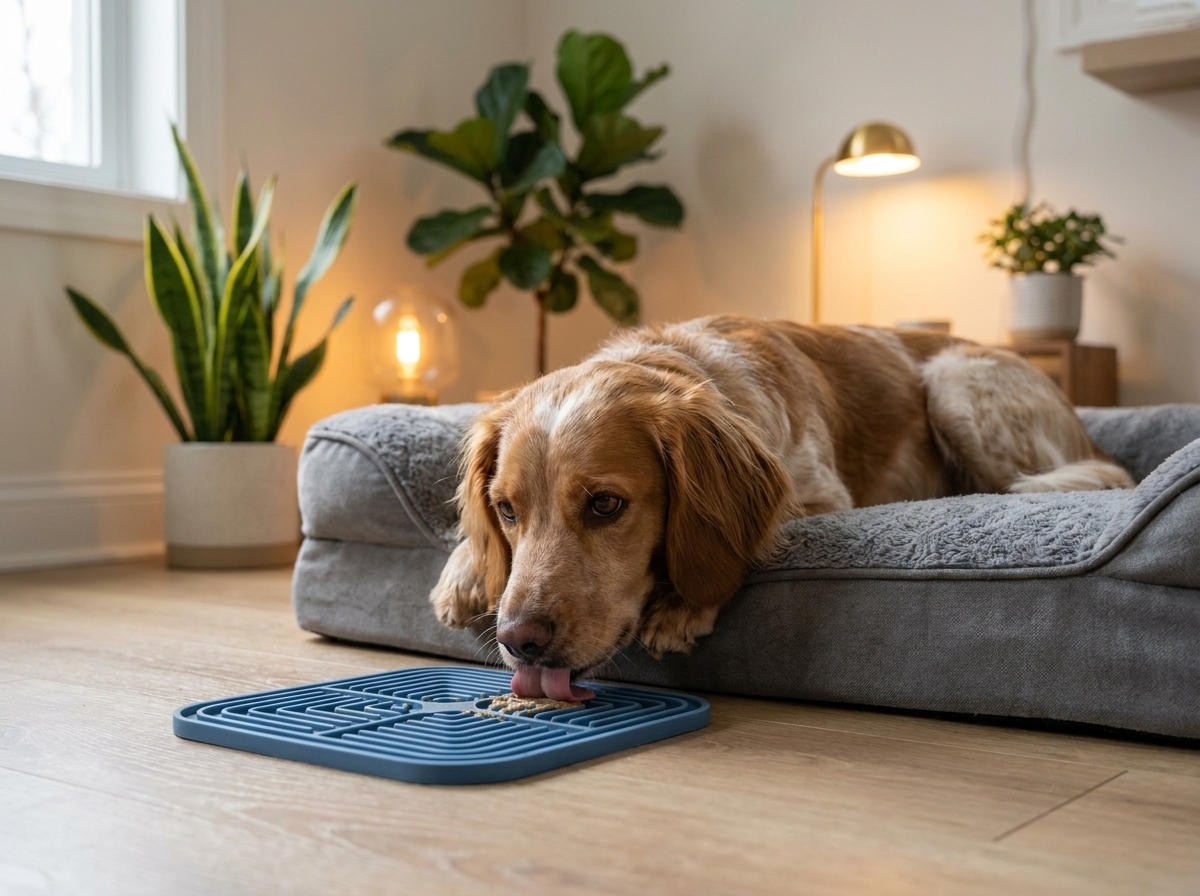
Assign a specific location—such as a designated orthopedic bed, a crate with the door open, or a quiet corner—as the “Calm Zone.” Only present the lick mat when the dog is physically settled in this area. If they try to carry the mat elsewhere, calmly retrieve it, return it to the Calm Zone, and prompt them to return. This establishes a clear spatial association: This physical space is where we engage in quiet, low-arousal behaviors.
Step 3: Introduce the Cryo-Chilling (Increasing Duration)
Once the dog eagerly runs to their Calm Zone when they see the mat, begin freezing the recipes. Start with a light 20-minute chill, gradually increasing the freeze time over several sessions until the recipes are fully frozen. This builds physical endurance and extends the duration of the soothing session to 20 or 30 minutes.
Step 4: Pre-Trigger Presentation (Active Desensitization)
If your dog’s anxiety is triggered by specific events (e.g., you preparing to leave, a thunderstorm approaching, or guests arriving), you must present the lick mat before the trigger occurs.
Present the mat 5 to 10 minutes prior to your departure routine (before you grab your keys or put on your shoes). By the time the trigger occurs, the dog’s parasympathetic nervous system is already activated, and their brain is occupied by the chemical cascade of endorphins. This helps prevent the sympathetic nervous system from spiking.
Step 5: The Independence Phase
Gradually transition from active monitoring to leaving the room while the dog is actively licking. Start by stepping away for 30 seconds, then returning and praising them quietly. Slowly increase your distance and the duration of your absence. The goal is to make the self-soothing behavior entirely independent of your physical presence.
—
Troubleshooting: When Lick Mats Fail
Even the most well-designed behavior plan can hit a roadblock. If you encounter any of the following common failure points, make these structural adjustments immediately.
“My Dog Chews and Destroys the Mat”
If your dog tries to bite, rip, or chew the lick mat rather than lick it, they are reverting to a high-arousal motor pattern, or they are frustrated by the difficulty of the task.
- The Fix: Transition to a rigid, hard plastic-backed mat or a heavy-duty natural rubber prep pan. You can also suction-cup the mat to a vertical surface, such as a glass sliding door or a refrigerator. This change in physical orientation makes chewing structurally difficult, forcing the dog to use their tongue.
“My Dog Gets Frustrated and Walks Away”
If the dog licks for a minute and then abandons the mat, the task is too difficult. The food may be frozen too solid, or the texture of the mat may be too deep for their muzzle shape (common in brachycephalic breeds like Pugs or Bulldogs).
- The Fix: Thaw the mat slightly before serving, or do not freeze it at all. Switch to a shallower mat with low-profile nubs. Ensure the recipe features highly aromatic ingredients (like warm bone broth or wet liver paste) to maintain their motivation.
“The Mat Doesn’t Last Long Enough”
If your dog clears a frozen mat in under five minutes, they are likely a highly efficient licker, rendering the therapeutic window too short to fully lower their cortisol.
The Fix: Implement the Multi-Layered Endurance Challenge* (Recipe 7) and freeze each layer fully solid. You can also place a silicone lick mat directly inside a shallow baking pan, pour a thin layer of organic bone broth around it, and freeze the entire assembly. This creates an ice-barrier that your dog must melt away to reach the main recipes.
“Resource Guarding Emerges in Multi-Dog Homes”
High-value items like lick mats can easily spark conflict in multi-dog households, which raises overall stress levels rather than reducing them.
- The Fix: If you have multiple dogs, you must separate them physically before presenting lick mats. Use baby gates, crates, or separate rooms. Never allow dogs to finish their mats in visual range of one another, as the tension of defending the resource will completely counteract the calming neurological benefits of the licking.
—
Prevention & Long-Term Management
Lick mats are an exceptional tool for managing acute stress, but they should be integrated into a broader, proactive lifestyle plan. To prevent the escalation of anxiety and compulsive chewing:
- Establish a Predictable Routine: Anxious dogs thrive on predictability. Provide physical exercise, training, and enrichment at consistent times every day.
- Balance Active and Passive Enrichment: Ensure your dog has opportunities for active mental stimulation (such as scent work or puzzle toys) as well as passive stimulation (like lick mats and sniff walks).
- Consult Professionals Early: If your dog displays severe, self-destructive behavior, self-mutilation, or extreme panic, use these environmental enrichment protocols as a supportive measure while consulting a board-certified veterinary behaviorist. For further guidance on canine mental health, explore the resources available through the American Kennel Club.
—
Key Takeaways
- Licking is Biologically Calming: Repetitive licking stimulates the vagus nerve and triggers the release of endorphins and dopamine, helping to lower heart rate and cortisol levels.
- Leverage the Gut-Brain Axis: Use calming, nutrient-dense ingredients like turkey (tryptophan), chamomile (apigenin), and kefir (probiotics) to support relaxation from the inside out.
- Build Up Difficulty Slowly: Introduce new mats unfrozen and in a quiet environment to build positive associations, transitioning to frozen recipes only after your dog is comfortable.
- Keep Safety First: Always supervise your dog’s interactions with lick mats. Choose durable materials that match their chewing habits to prevent ingestion of silicone or plastic.
Use as a Proactive Tool: Introduce the lick mat before* known anxiety triggers occur, helping to keep your dog’s nervous system calm and relaxed before stress levels have a chance to spike.