

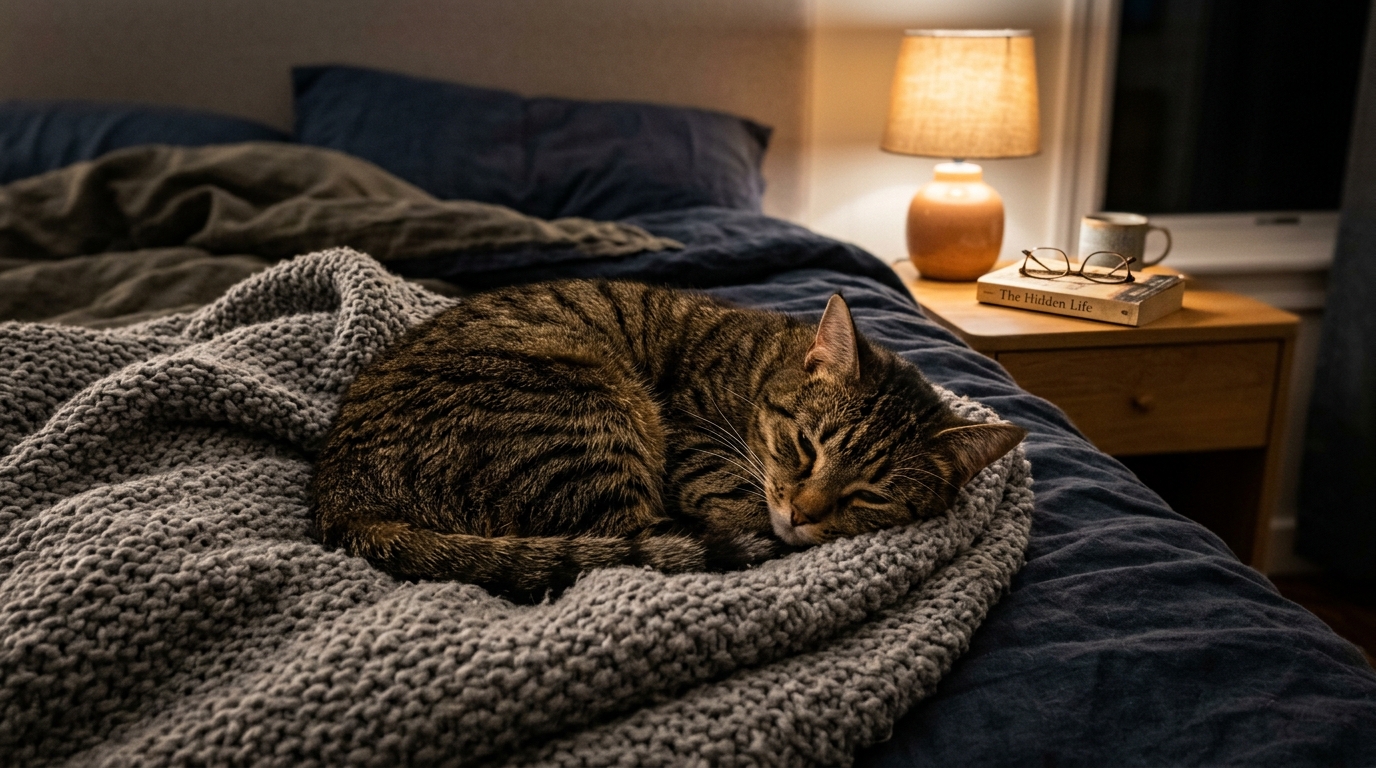
We’ve all been there. It is 2:47 AM. You are deep in the restorative embrace of REM sleep when, suddenly, a furry four-pound projectile launches itself off your chest, hurtles toward the curtains, and emits a cry that sounds suspiciously like a battle hymn. This is the “Zoomie Hour,” a phenomenon known to cat owners worldwide.
Struggling with a restless pet is more than just a minor inconvenience; it’s a disruption of your biological clock. But here is the reality: your cat isn’t trying to be a jerk. They are simply following an evolutionary blueprint that doesn’t quite align with the modern human 9-to-5. To fix your cat sleep schedule, you don’t need a miracle—you need a system.
By implementing these essential 5 cat bedtime rituals, you can bridge the gap between feline instinct and human exhaustion.
The Science of the “Midnight Crazies”
Before we dive into the rituals, we have to understand the “why.” Many people believe cats are nocturnal. This is actually a biological myth. Cats are crepuscular, meaning their natural peaks of activity occur during twilight—dawn and dusk. In the wild, this is when their prey is most active and the light levels provide the ultimate tactical advantage for a predator.
Furthermore, cats follow a polyphasic sleep pattern. While humans try to consolidate sleep into one long eight-hour block, cats snooze in short bursts throughout the day. According to veterinary behaviorists, the average indoor cat sleeps between 12 to 16 hours a day. If they’ve been napping while you were at work, they wake up at 8:00 PM with a full “gas tank” of energy.
To align a cat sleep schedule with your own, you must artificially manipulate their “Hunt-Catch-Kill-Eat-Groom-Sleep” cycle.
1. The High-Intensity Play Session (The “Hunt”)
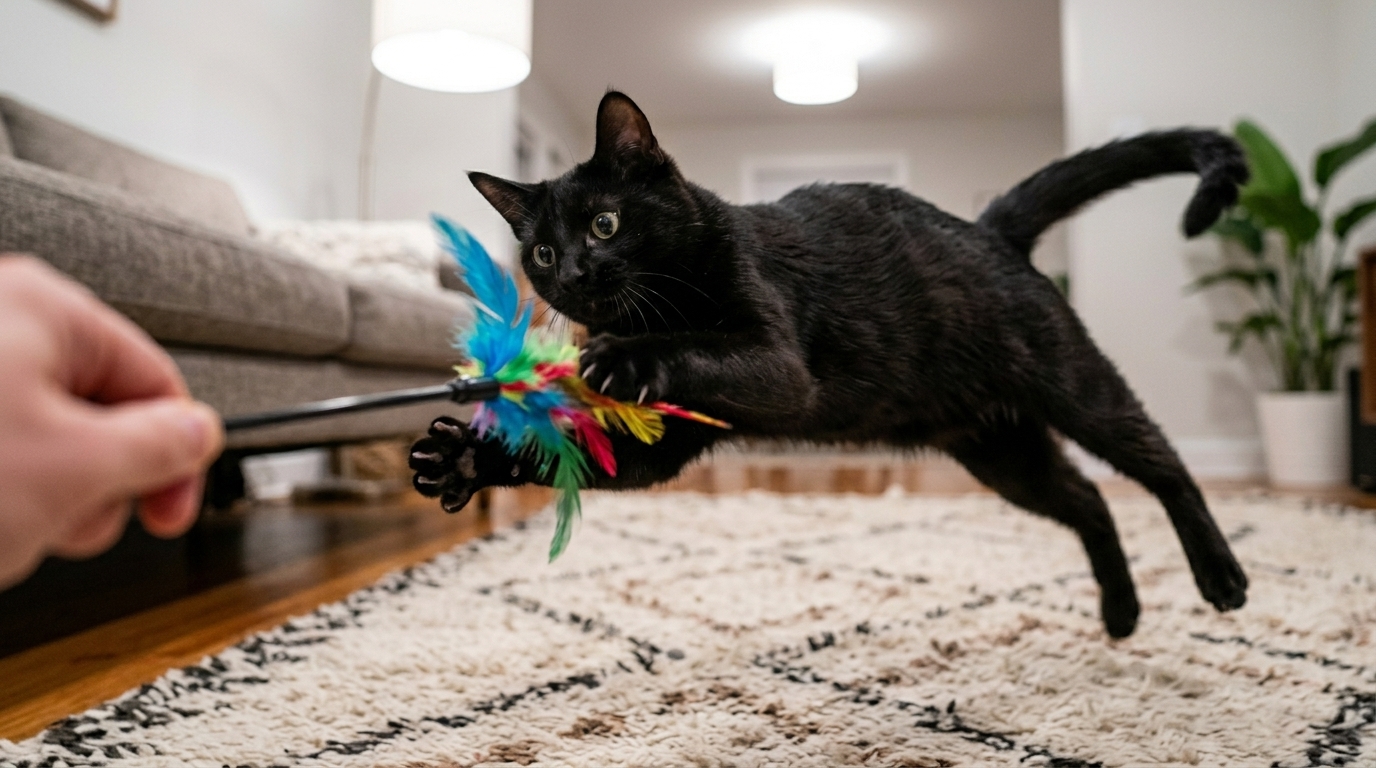
The first and most vital of all Cat Bedtime Rituals is the simulated hunt. You cannot expect a cat to go from zero to “sleep mode” without first expending their stored predatory energy.
Why it Works
In nature, a cat’s nervous system is geared for short, explosive bursts of energy. If that energy isn’t channeled into a toy, it will be channeled into your ankles or the living room rug.
How to Do It
- Duration: 15–20 minutes, roughly an hour before you plan to sleep.
- The Gear: Use “wand-style” toys (like Da Bird) that allow you to mimic the erratic movements of a bird or mouse.
- The Technique: Don’t just wave the toy in their face. Make it hide behind furniture. Make it “scurry” away. Let the cat stalk, crouch, and eventually pounce.
- The “Grand Finale”: End the session by letting the cat finally “kill” the toy. Hold it still, let them bunny-kick it, and celebrate their victory.
Pro Tip: Avoid laser pointers for the final bedtime play. Because the cat can never actually “catch” the light, it can leave them in a state of high neurological arousal and frustration—the opposite of what we want for bedtime.
2. The Post-Play Feast (The “Eat”)
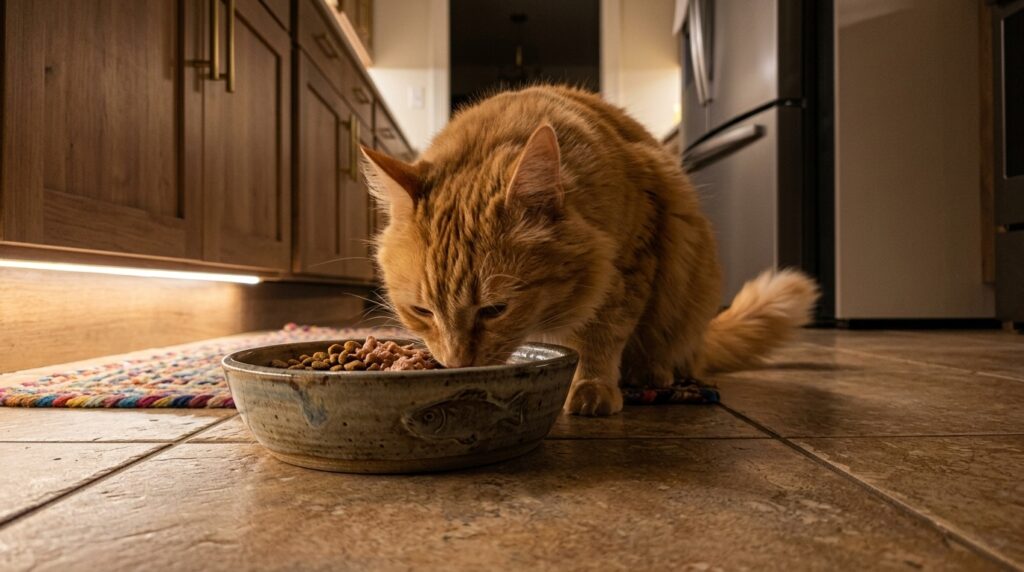
In the wild, a successful hunt is always followed by a meal. Biology dictates that after a large protein intake, the body directs energy toward digestion, triggering a natural “food coma.”
Fixing the Cat Sleep Schedule with Calories
If you feed your cat their main dinner at 5:00 PM, they will be hungry and restless by midnight. To align your schedules, shift their primary meal (or a substantial “late-night snack”) to immediately follow the play session.
| Feeding Style | Effect on Sleep |
| Free Feeding | Leads to grazing and erratic energy spikes. |
| Scheduled Meals | Regulates the metabolic clock and predicts sleep. |
| Timed Bedtime Snack | Triggers postprandial somnolence (the “food coma”). |
By providing a high-protein meal right before bed, you are signaling to their brain that the “hunting day” is officially over.
3. Sensory Grooming and Bonding (The “Wash”)
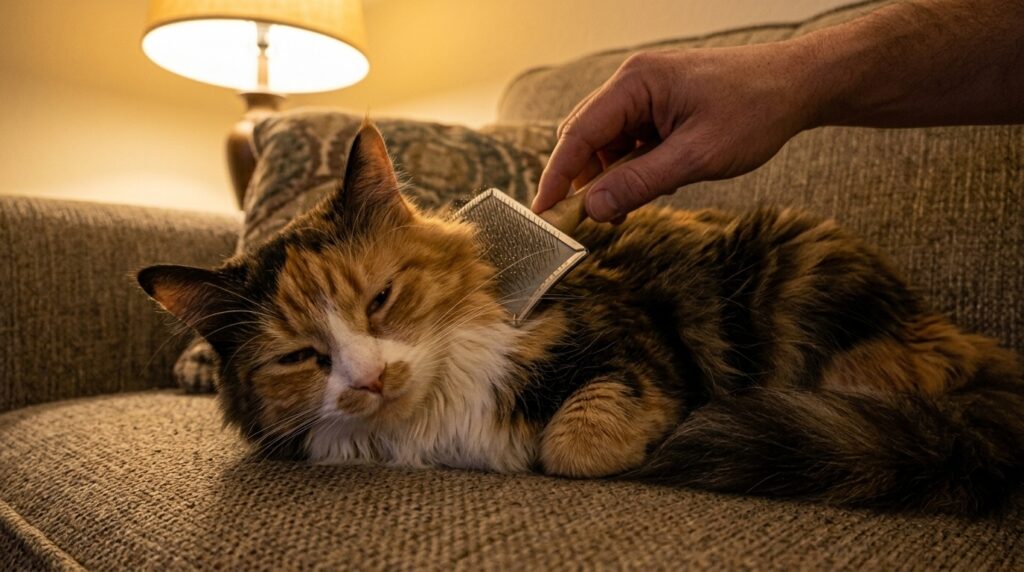
After a wild cat eats, they find a safe spot to groom. This isn’t just about hygiene; grooming releases endorphins that lower the cat’s heart rate and promote relaxation. You can tap into this biological trigger through Cat Bedtime Rituals that involve gentle touch.
The Power of the Brush
If your cat enjoys being handled, spend five minutes brushing them after their meal. Use long, slow strokes. This mimics the feeling of a mother cat grooming her kittens.
- Oxytocin Release: Gentle stroking increases oxytocin in both the cat and the human, lowering stress levels.
- The “Silent” Connection: Keep your voice low and rhythmic. Avoid loud noises or “baby talk” that might excite the cat.
If your cat isn’t a fan of brushes, a simple chin-scratching session or a few minutes of quiet sitting together on the couch serves the same purpose. The goal is to transition from the “high” of the play session to a “low” state of calm.
4. Environmental Optimization (The “Nest”)
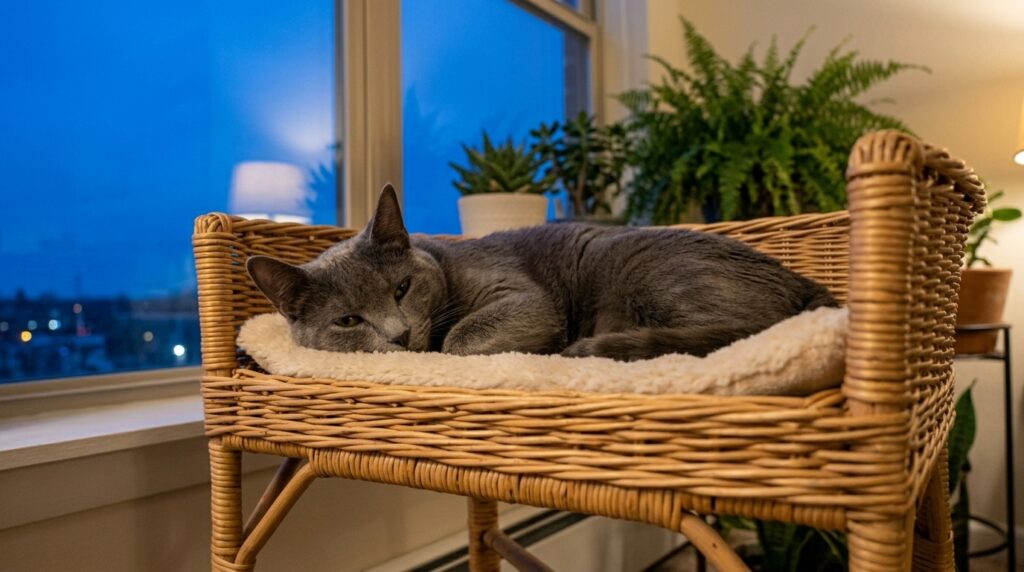
Your bedroom environment plays a massive role in whether your cat decides to settle down or explore. Cats are highly territorial and sensitive to temperature.
Temperature and Texture
Cats have a higher basal body temperature than humans (101.0 to 102.5F). They love heat. To encourage them to stay in their own bed rather than colonizing your face:
- Heated Pads: Use a pet-safe self-warming mat or a low-voltage heated bed.
- High Ground: Cats feel safest when they are elevated. A cat tree near a window or a “wall perch” can be much more enticing than a floor bed.
- Scent Familiarity: Place an old T-shirt you’ve worn in their sleeping area. Your scent acts as a natural pheromone that provides a sense of security.
The “Blue Light” Rule
Just like humans, cats’ circadian rhythms can be disrupted by artificial light. When you begin your bedtime ritual, dim the lights in the house. This environmental cue tells the cat that the “crepuscular window” is closing and it is time for the long rest.
5. The “Lights Out” Verbal Cue (The “Sleep”)
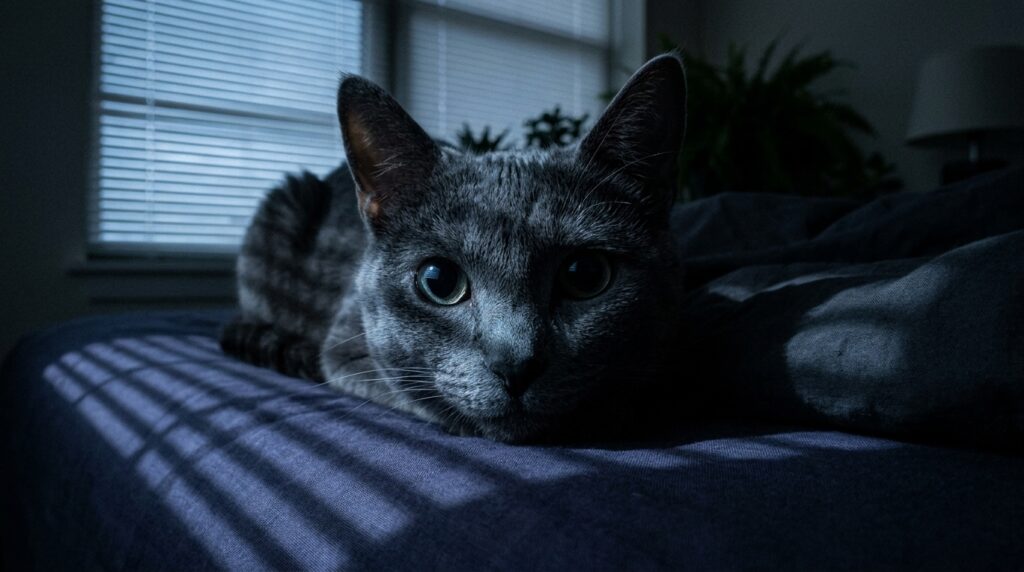
Consistency is the bedrock of behavior modification. Cats are creatures of habit; they thrive on predictability. The final ritual is the implementation of a “closing ceremony.”
Establish a “Bridge” Phrase
Choose a specific phrase you say every single night when you finally turn off the lights. It could be “Bedtime,” “Lights out,” or “Time for sleeps.” Pair this with a specific action—like closing a certain door or turning off a specific lamp.
The “No-Response” Policy
This is the hardest part of any cat sleep schedule overhaul. Once the lights are out and you are in bed, you must become “boring.”
- If your cat meows at the door: Ignore it. * If they knock a pen off the nightstand: Ignore it.
- If they pounce on your feet: Do not move.
Any attention—even negative attention like scolding—reinforces the behavior. If you shout “Stop it!” the cat learns that making noise results in a “human interaction.” By remaining a silent, unmoving statue, you teach the cat that night-time is a void of social reward.
Troubleshooting: Why is my cat still awake?
If you’ve implemented these Cat Bedtime Rituals and your feline is still acting like a caffeinated toddler, consider these external factors:
- Medical Issues: Hyperthyroidism or chronic pain (especially in older cats) can cause nocturnal restlessness. If the behavior is new or accompanied by weight loss, consult a vet.
- Age: Kittens are simply high-energy machines. They may require two or three play sessions throughout the evening to fully wind down.
- Boredom during the day: If your cat stares at a wall for 8 hours while you’re at work, no amount of nighttime play will fix the deficit. Use food puzzles and window perches to provide “passive enrichment” during the day.
Conclusion: Patience is a Virtue
Fixing a cat sleep schedule doesn’t happen overnight. It is a biological recalibration. You are essentially asking an apex predator to ignore millions of years of instinct in favor of your sleep preferences.
However, by following the “Hunt-Eat-Groom-Sleep” cycle, you are working with their biology rather than against it. Within two to three weeks of consistent Cat Bedtime Rituals, you will notice a shift. The 3:00 AM sprints will become 3:00 AM snores.
Your cat will be happier, your shins will be safer, and most importantly, you will finally get the eight hours of sleep you deserve. Sweet dreams (to both of you).
Summary Table: Your New Nightly Timeline
| Time | Action | Goal |
| 8:30 PM | Dim the lights | Environmental cue for wind-down. |
| 9:00 PM | High-intensity play | Drain the “energy tank” via hunting. |
| 9:20 PM | Large protein meal | Trigger postprandial sleepiness. |
| 9:30 PM | Brushing/Grooming | Lower heart rate and bond. |
| 10:00 PM | “Lights Out” Cue | Official start of the sleep period. |
Final Thought: Remember, the key is consistency. If you break the ritual on the weekends, your cat’s internal clock will reset. Stick to the plan, and the results will follow!